
The Moral Weight of the Modern Body
https://www.flickr.com/photos/gageskidmore/52984638321/
Edited by Alex Elstrodt, Thomas Baxter, Owen Andrews, and Sarah Ahmad
“What I eat in a day,” “pilates body,” “freshman 15,” "Ozempic boom.” These phrases are thrown at us in the media we consume every day, from social media to podcasts to even the news. Celebrities are losing weight, even those who once branded themselves as body-positive icons.
A decade ago, popular social media site Tumblr became home to the phrase “thinspo,” short for “thin inspiration” or “thin inspo.” This current era, unlike the blatant pro-anorexia Tumblr, is much more implicit in its messages. Now, dieting is dressed up as “wellness” or “clean living,” rebranded under the language of health, hormones, and “empowerment.”
Pop star Meghan Trainor, once coveted in the body-positivity community for her song “All About That Bass,” received backlash over changing her lyrics from “Yeah, it’s pretty clear, I ain’t no size two” to “Yeah, it’s pretty clear, I got some new boobs” in light of her breast augmentation and lift she had earlier this year. Critics claimed she betrayed the body positive movement and shouldn’t sing this song now because her body doesn’t represent it anymore. However, defenders countered that empowerment includes women having the freedom to choose what makes them feel good, and the choice to lose weight is a part of that. This discourse more broadly reflects a crucial issue: what exactly is body positivity? How do we define it when the beauty standards never stop shifting?
The reality is that the conversation around women’s bodies has never really been about health; it’s been about control. Even as language has evolved, the underlying message has stayed the same. Women’s worth remains tied to how they look.
This conversation has recently taken on a distinctly political edge. Conservative Christian influencers are now leading a cultural revival around thinness and tying women’s body size to morality and religion. At the forefront of this movement are figures like podcaster and wellness influencer Alex Clark, influencer Liv Schmidt, who is associated with the term “SkinnyTok,” and Ballerina Farm, a “tradwife” influencer who promotes a meat-heavy, domestic lifestyle.
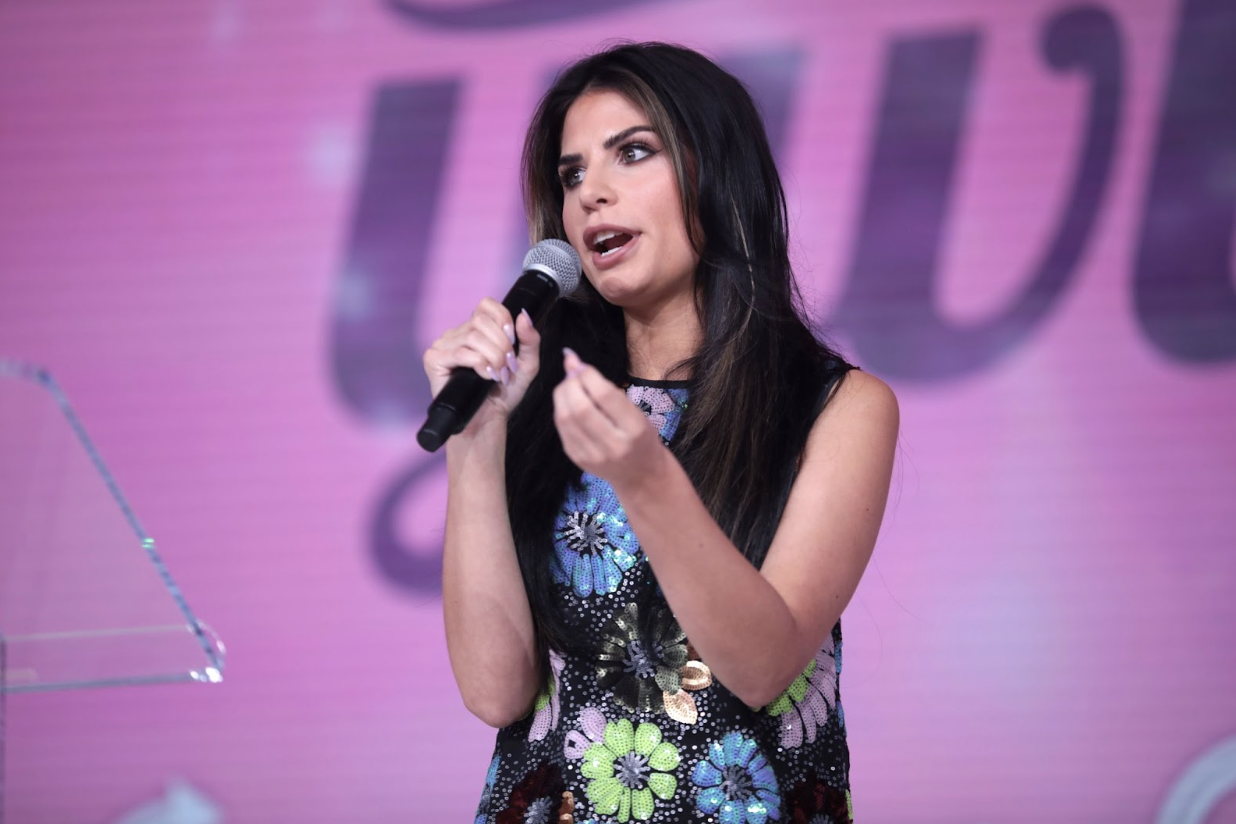
At the Young Women’s Leadership Summit, Clark declared to an applauding crowd, “Look around this room, let’s just be honest. It’s never been hotter to be a conservative. You are in this room and you are witnessing a cultural revolution. We’ve got the girls who lift weights, eat clean, have their hormones balanced, have their lives together. Less Prozac, more protein. Less burnout, more babies. Less feminism, more femininity.”
In this short clip, Clark captured the essence of the movement. Fitness isn’t just about health; it’s about virtue. In this new era, thinness signifies discipline, order, and adherence to traditional gender roles. Eating “clean” becomes synonymous with moral purity. Being fit becomes a political identity. The “ideal woman” in this world is lean, hyper-feminine yet disciplined, politically conservative, and devoted to traditional domestic life.
This conservative wellness culture isn’t entirely new. It builds on decades of moralizing around food and body size, going all the way back to evangelical diet programs like The Daniel Plan, which says that "Satan does not want you to live a healthy life because that honors God.” Through this perspective, gluttony is not just unhealthy; it’s sinful. Thus, losing weight is a form of spiritual discipline.
It’s not difficult to find the appeal in this message. It offers simplicity in a world that feels confusing. There is a constant turnover of advice, powders, and protocols in modern food culture, and thus it demands constant decision-making. For many, the clarity of a moral framework around food feels comforting. But this comfort can quickly turn into control. When morality is tied to body size, it leaves no room for reality, the reality that health looks different for everyone and that discipline doesn’t always equal happiness.
Still, it’s important to recognize that body positivity shouldn’t mean rejecting health altogether. There should be boundaries to the movement, boundaries that separate acceptance from glorification. It’s crucial to promote comfort and self-acceptance, but it must coexist with honest conversations about health. Encouraging people to live and accept their bodies doesn’t have to mean denying the medical realities of obesity or dismissing the importance of physical well-being. True body positivity should empower people to care for their bodies, not neglect them, and to find balance and not to swing between extremes of self-denial or self-indulgence.
To reclaim body positivity, we have to move beyond aesthetics entirely and away from the endless debates over whether losing weight is “betrayal” or “empowerment.” Instead, we should be asking who benefits from keeping women obsessed with their bodies in the first place and how these obsessions are being used to reinforce political agendas.
So, where do we go from here? Start with questioning the messages that associate health with morality. Have uncomfortable conversations, especially with yourself, about how you can take care of yourself without expending all of your energy on attempting to reach standards you didn’t create. Because true wellness isn’t about shrinking yourself to fit a mold but expanding your understanding of strength, health, and self-worth.