
The reality of Olympic neutrality: Representing a country doesn’t mean agreeing with it
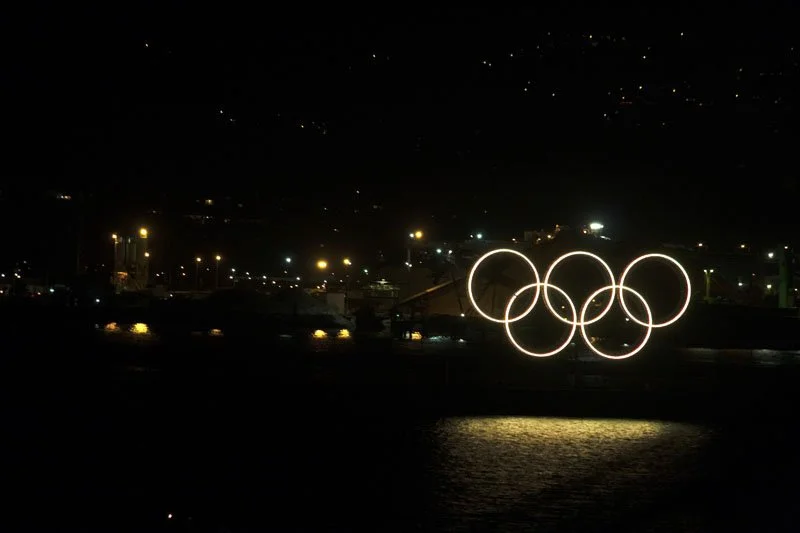
"Olympics Rings" by adrian8_8 is licensed under CC BY 2.0.
Edited by Madelyn Bello, Rishi Chandra, Amelia Cantwell, and Owen Andrews
The latest Olympic controversy didn’t begin on the slopes or on the podium. It began after the competition ended, when a single comment from an athlete triggered political backlash and a national debate. Hunter Hess, an American freestyle skier who represented Team USA in Milan, was asked at a press conference how he felt representing the United States, to which he responded that it “brings up mixed emotions” and is “a little hard.” In response to Hess’s comment, President Trump took to Truth Social, calling the Olympian a “real loser” and claiming it is “very hard to root for someone like this.” In an instant, a familiar question returned: should athletes stay silent for the sake of Olympic neutrality?
Rule 50 of the Olympic Charter tries to answer that question by separating competition from political demonstration. But the modern reality is messier. Today, athletes can follow the rules and still find themselves pulled into political conflict the moment they open their mouths. The problem is no longer simply what athletes say; it is how quickly their words become political symbols once the games are over.
The Olympics have always aspired to be neutral ground: a temporary pause in global conflict where athletic achievement takes precedence over ideology. Rule 50 reflects that ambition. It prohibits demonstrations inside competition venues while still allowing athletes to speak freely in interviews, press conferences, and on their own platforms. The idea is not silence but separation, preserving the field of play as a shared space while recognizing athletes as individuals outside it.
Yet the controversy surrounding athlete speech suggests that this balance is increasingly difficult to maintain. Athletes who speak about personal experiences or national issues outside of competition are often treated as though they have violated the spirit of the Games itself. Political figures and commentators who insist sports should remain apolitical frequently become the first to turn those comments into partisan flashpoints.
Olympic politics, however, are hardly new. The 1936 Berlin Games were famously used by Nazi Germany as a global showcase of prosperity to cover racism and aggression, demonstrating how easily sport can become a vehicle for national messaging. During the Cold War, the 1980 and 1984 Olympic boycotts transformed athletes into symbols of geopolitical conflict beyond their control. Even moments of individual protest, such as the 1968 Black Power salute, where U.S. athletes Tommie Smith and John Carlos raised their fists during the medal ceremony and were subsequently expelled from the Games, show how global sporting events inevitably reflect larger political realities. They faced significant backlash at home, including death threats and professional consequences. Yet over time, the gesture has come to be widely recognized as one of the most powerful moments of athlete activism in sports history, demonstrating how reactions to political expression in sport can shift dramatically over time. In response to decades of political protest, Rule 50 emerged not to entirely erase politics from the Olympics, but to prevent the competition itself from becoming another battleground focused on ideological confrontation rather than athletic performance.
What feels different now is the speed and scale at which these moments are shared and spread. Comments that might have once remained within a post-event interview now circulate instantly online, clipped and reframed for millions of viewers. A reflective or ambiguous comment can quickly become evidence in a domestic political argument, stripped of context and reinterpreted through partisan lenses. Rule 50 can regulate physical space, but it cannot regulate the digital ecosystem where modern Olympic controversies are increasingly litigated.
This environment places athletes in an impossible position. They are told to represent their country proudly, yet any expression that deviates from a narrow expectation of patriotism can trigger backlash. Underlying many of these controversies is a deeper disagreement over what patriotism truly means. Some critics assume that wearing a national uniform requires public agreement with national leadership or policies. However, American political tradition has long treated criticism not as betrayal but as participation. No citizen of a free nation is required to approve of every action taken in its name.
Much of the criticism directed at Olympians rests on a simple assumption: that athletes should focus only on their sport and avoid politics altogether. But this posits that athletes exist outside of ordinary civic life. They don’t. Olympians are not separate from the societies they represent; they are citizens who live, vote, work, and move through the same political realities as everyone else. The fact that they compete at an elite level does not erase the personal experiences that shape their views. Expecting athletes to step completely outside politics asks them to suspend a part of their identity from the moment they put on a national uniform.
In that sense, athletes who speak honestly, even critically, about their experiences are not rejecting their country. They are exercising one of the rights that define it. Loving a country does not necessarily mean defending every decision it makes; often it means believing the country is strong enough to confront its flaws openly. The expectation that athletes must remain silent risks turning them into symbols rather than people, bodies meant to perform rather than citizens allowed to think.
At the same time, concerns about politicization are not entirely misplaced. The Olympics remain one of the few global events truly capable of uniting audiences across political divides, even if only for a brief time. Many viewers worry that overt political activism during the competition could fracture that fragile sense of shared unity. In some cases, highly visible protest risks shifting attention away from competition and into ideological conflict. At the same time, not all political expression divides audiences; moments like athletes speaking out on human rights have also generated widespread support and solidarity. Rule 50 exists not because activism always undermines unity, but because the Olympic stage is uniquely visible, and even the perception of politicization can reshape how the Games are experienced.
But that distinction is increasingly lost in public debate. The current pattern is not athletes bringing politics onto the podium; rather, it is the world outside of the stadium attaching political meaning to everything athletes say afterward. Calls for competitors to “just compete” or “pipe down” often give way to public attacks and television debates, even if athletes expressed moderate or reflective opinions. In trying to enforce neutrality, critics may actually be eroding it by transforming personal speech into national controversy.
If the recent Winter Games in Italy felt particularly politically charged, the tension may only grow in the next few years. Many observers have suggested that the 2028 Los Angeles Olympics could further amplify these tense dynamics. Hosting the Games in the United States, in a deeply polarized political climate, is likely to place athletes under greater pressure to serve as cultural symbols. Domestic debates over identity, patriotism, and public speech may follow competitors into interviews, social media posts, and press conferences, regardless of how carefully they navigate Olympic rules. The challenge for the IOC may not be controlling athletes' behavior but managing the political narratives surrounding them.
This raises a larger question: Is Olympic neutrality something institutions can enforce, or something audiences must choose to respect? Rules can limit demonstrations on the field of play, but they cannot prevent politicians, media outlets, or online audiences from framing athletes as ideological representatives. Neutrality depends not only on athletes but also on collective restraint, a willingness to let competition stand on its own.
None of this means the Olympics should become a political stage. Protecting the integrity of competition remains essential, and Rule 50 represents a reasonable attempt to balance expression with shared experience. But if the goal is truly to keep politics from overshadowing sport, responsibility cannot rest solely on athletes. The people demanding apolitical competition must also resist the urge to turn every athlete’s words into a partisan test.
The Olympics have never been completely free from politics, and pretending otherwise misses the point of the Games. Its value lies in creating a rare moment when rivals can be seen first as athletes rather than ideological symbols. Preserving that space does not require restricting what competitors do inside the arena; it requires restraint from everyone watching, reacting, and commenting from home.
The real test of Olympic neutrality may no longer be whether athletes stay silent on the podium. It may be whether we are willing to remember that the people representing their countries are still citizens who carry the same freedoms, disagreements, and complexities as everyone else.