
A path forward: What the NYC mayoral election teaches us about the future of the Democratic Party
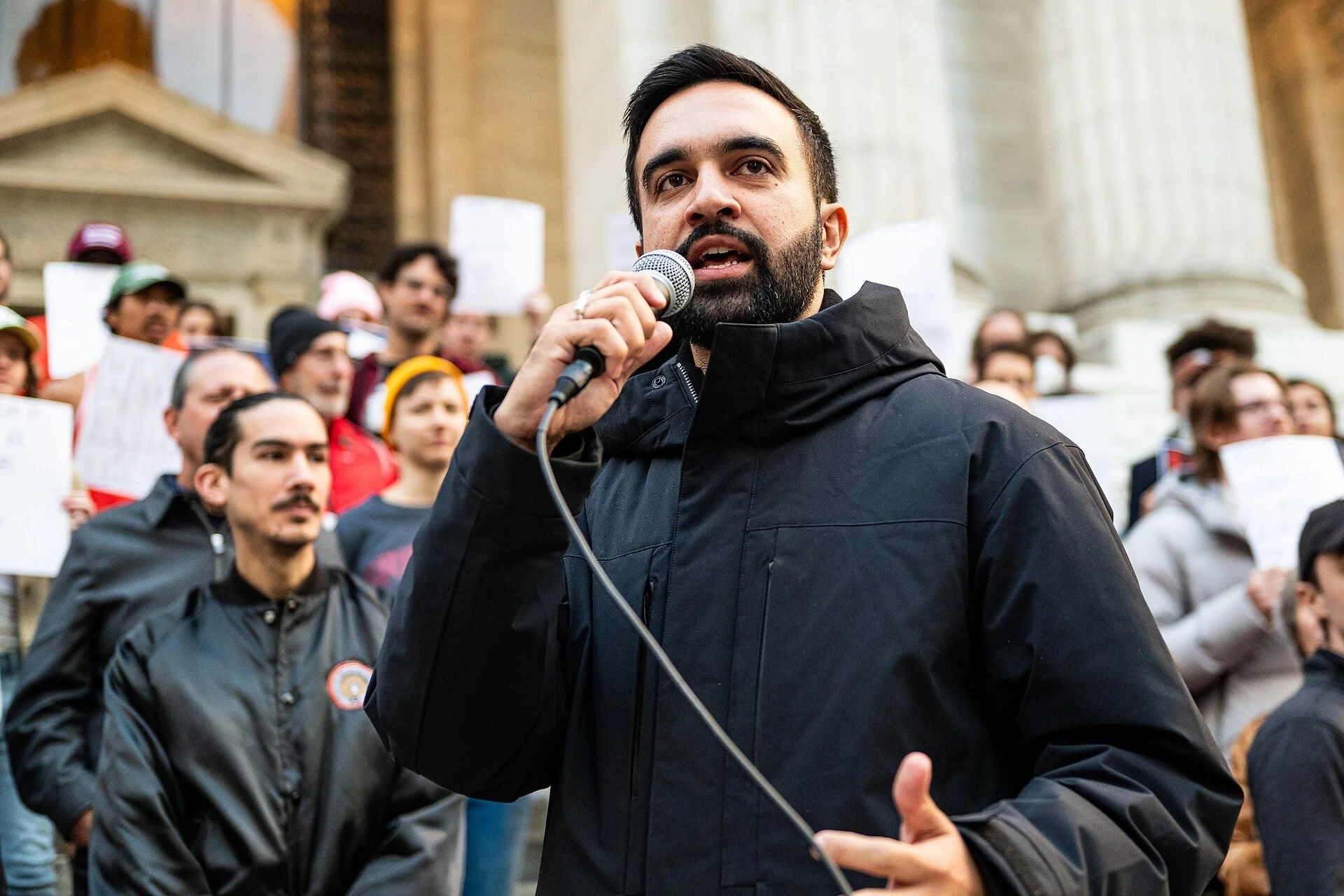
“Zohran Mamdani at the Resist Fascism Rally in Bryant Park on Oct 27th 2024” by Bingjiefu He is licensed under Creative Commons Attribution-Share Alike 4.0 International license

Edited by Tanmayi Patil, Aliza Susatijo, Amelia Cantwell, and Owen Andrews
November 2025 had a number of highly anticipated elections . All eyes were on Virginia and New Jersey, which both held gubernatorial elections, as well as New York City, where the much-anticipated mayoral election took place. These elections served as important indicators of national political opinion, with many referring to them as a bellwether for how the American public feels about Trump’s presidency. Just as importantly, these elections provided insight into what the future of American politics may look like in a time of great political uncertainty.
Democrats ultimately delivered a “blue wave,” which provided a promising check on the power of the Trump administration. It is now crucial that Democrats analyze precisely what went well in these elections, with the goal of continuing this success in the coming years. What was seen by the Democrats was not only a political victory but also a new sense of hope for the party’s future. The most helpful case study for understanding the future of the Democratic Party is Zohran Mamdani’s mayoral victory in New York City.
The New York City election gained considerable national attention when Mamdani beat former Governor Andrew Cuomo in the Democratic primary in July. Mamdani was a member of the state assembly and is now the first South Asian and Muslim person to serve as mayor of the city. He turned heads, running on the platform of making the city more affordable by freezing rent, providing fast and free public transportation, no-cost childcare, and city-owned grocery stores, and taxing big corporations and the wealthiest New Yorkers. His background as an immigrant, democratic socialist, and relatively unknown assemblyman made his defeat of well-known political figure and former New York governor Andrew Cuomo all the more surprising and, for many Democrats, indicative of an exciting new direction for the party.
Mamdani provided a stark contrast to Andrew Cuomo, who resigned as New York governor in disgrace following claims of sexual harassment from 11 women. Cuomo pointed to Mamdani’s lack of experience and painted him as too far-left, as well as attempted to instill fear in voters that Mamdani was anti-Israel and would promote antisemitism across New York City. Despite these attempts, Mamdani won the Democratic nomination, leading Cuomo to announce that he would continue to run for mayor as a third party candidate. In his announcement, Cuomo criticized Mamdani for offering “slick slogans but no real solutions.”
While Republican nominee Curtis Sliwa also made a run at becoming mayor, many viewed the competition between Cuomo and Mamdani to be the most interesting. For a lot of Americans, the contrast between the two candidates served as a face-off between the old and new Democratic party, with Mamdani serving as a possible turning point. Many worried that New York City was not ready to elect Mamdani, even if the alternative was Andrew Cuomo. However, Mamdani not only won the democratic nomination but also later won the mayoral election, invigorating the American people in a way that Democrats have been unable to do for years.
If Democrats wish to continue this trend, it is important to look closely at exactly why Mamdani was so successful. A lot of Mamadani’s political success can be seen in his connection with new voters. During his campaign, Mamdani’s energy and clear excitement about the future of the Democratic Party engaged young voters, who felt the Democratic Party did not adequately represent them. He was a master of creating “viral” moments in his speeches and debates. In his victory speech, Mamdani delivered a stirring message to President Trump—“Donald Trump, since I know you’re watching, I have four words for you: Turn the volume up. To get to any of us, you will have to get through all of us.” It is moments such as this one that demonstrate why a new generation was excited to vote for Mamdani. He represents not only policies that they agreed with, but also a fighting spirit and a defiance of the norm, which many voters had grown unsatisfied with. Possibly Mamdani’s most viral moment on the campaign trail was during the June Democratic primary debate when he responded to Cuomo’s mispronunciation of his name. Mamdani asserted, “The name is Mamdani, M-A-M-D-A-N-I, you learn how to say it because we’ve got to get it right.” This clip became an iconic line from Mamdani and went viral across social media platforms, particularly in the days leading up to the election. This knack for connecting with his audience and creating viral moments made Mamdani stand out not just as a politician but as a relatable and personable public figure.
Beyond his ability to excite his audience through engaging speeches and viral sound bites, Mamdani provided a clear plan for improving the lives of his constituents. Mamdani provided an outline for his vision, for example, he described taxing wealthy residents and raising the city’s corporate tax rate as a means for funding his expansion of universal childcare. He described appointing members to the city’s Rent Guidelines Board who support his plan to freeze the rent for roughly two million tenants. He also put forth a plan to establish five city-controlled supermarkets, with the goal of offering groceries at lower prices for those who have limited access to fresh food. Mamdani’s ability to pair his captivating campaign presence with tangible policy initiatives led voters to trust him and view him as a candidate with his finger on the pulse of the issues that most plagued the city.
So what can the Democratic Party learn from Mamdani’s success? Mamdani, in many ways, represented a candidate that Democrats would worry is too “out there” for the party to accept. However, his victory and the clear excitement and support that fueled his campaign demonstrate that a change may be precisely what the Democrats need to find their footing. Mandani’s victory goes beyond New York City. Data for Progress found voters across the nation support many of the key pillars of Mamdani’s platform, such as speeding up the approval process to build affordable housing and penalizing landlords who significantly increase rent or violate tenant protections. President Trump’s victory in 2024 came as a shock to many Democrats who were left wondering what the future of the party might look like. Mamdani’s mayoral victory provides us with an answer.
Democrats must move away from this fear of violating party norms or stepping too far to the left. This is not to say that the Democratic Party needs to become entirely socialist, but rather that Democrats need to recognize that advocating for political leaders that come from outside the dominant political dynasties that have led both sides of American politics can have a powerful impact on the party’s success. Mamdani is a breath of fresh air for many voters, as his earnest desire to represent the people and his unwavering commitment to policies and promises many Democrats have avoided in the past gave voters a sense of hope that had been missing from the party. As Democrats continue to rebuild, they can look to Mamdani as an example of what the future of the party should be.