
Requiem for the Political Martyr

Edited by Arya Kumar, Elizabeth Adams, Owen Andrews, and Sarah Ahmad
The word “martyr” got its present meaning from early Christian propagators who adapted the Greek word for “witness.” The criteria to be considered a Christian martyr are strikingly simple, and the Catholic Church, to this day, declares “official” martyrs. As American politics increasingly resembles religion in its zealousness, moralization of disagreements, and violence, it is only natural that the question of martyrdom is raised after major political assassinations. The United States itself has a long history of political martyrs, from Crispus Attucks, who was hailed as a martyr after being killed in the Boston Massacre, to the many high-profile assassinations of the 1960s, including Martin Luther King Jr., President John F. Kennedy, and presidential candidate Robert F. Kennedy. However, the charged nature of political martyrdom often inflames tensions within a polity and shouldn’t be embraced. In the U.S., the killing of Crispus Attucks was one of the events that helped kick off the American Revolution, and the assassination of Martin Luther King Jr. led to riots across the nation. Abroad, the assassination and later ascension to martyrdom of Jacobin radical Jean-Paul Marat in 1793 was a catalyst for the Jacobin ‘Reign of Terror,’ which killed an estimated 20,000 people. Considering the violence it causes, political martyrdom is a practice that shouldn't be embraced regardless of personal political views. The assassination of Turning Point USA founder and conservative commentator Charlie Kirk shouldn't be another instance where violence begets more violence.
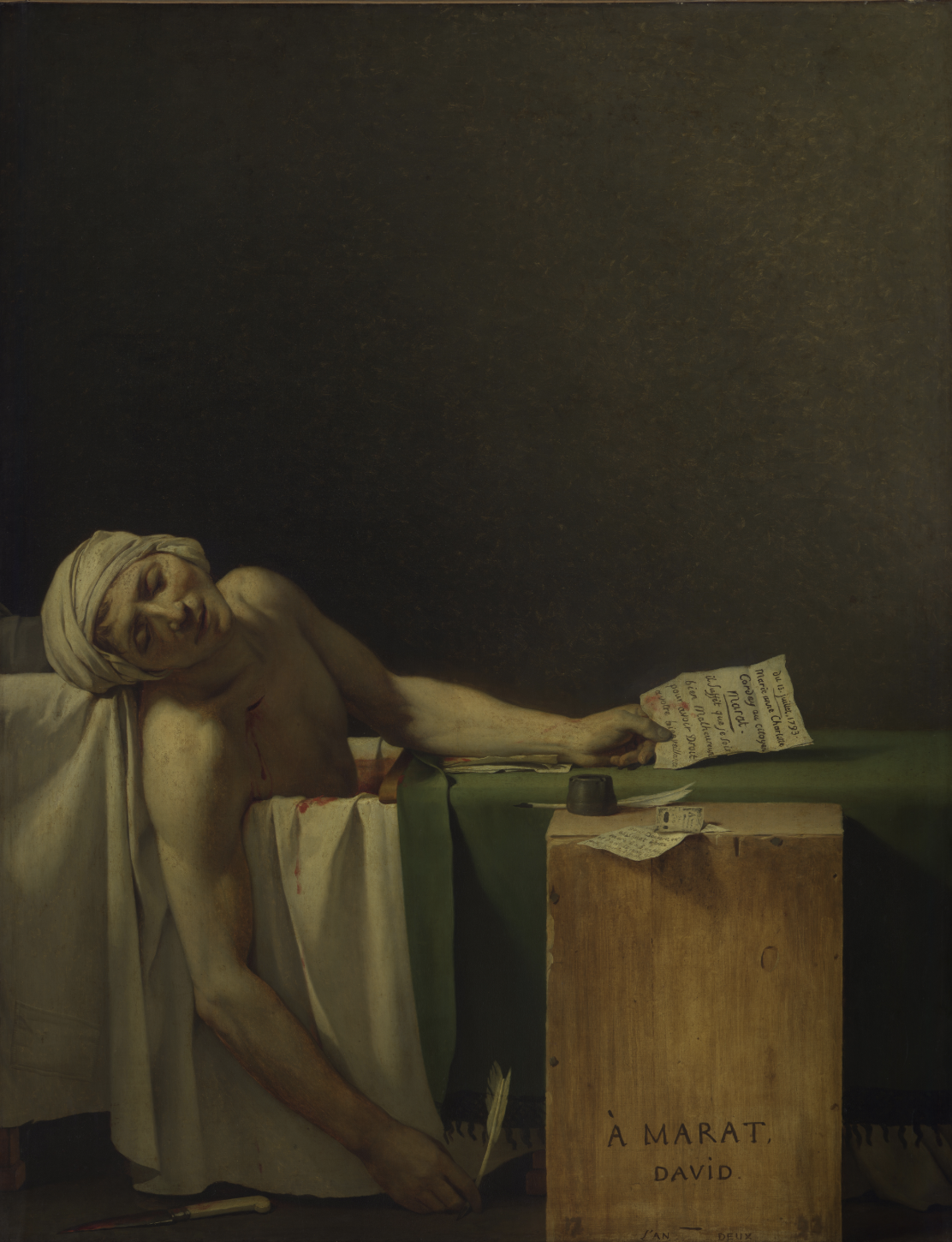
To essentially deify a deceased political figure is asking for passions to be inflamed — it should be no surprise when acts of violence occur or existing societal fractures burst open. The propagandizing of political martyrs uses their deaths to advance a broader sociopolitical project. Take the assassination of Jean-Paul Marat as an example. Marat was a physician by trade but gained prominence for his controversial writings opposing the aristocracy and supporting the Jacobins over other republican groups. Marat’s writings were bloodthirsty, famously telling his readers, “Five or six hundred heads cut off would have assured your repose, freedom, and happiness.” The Jacobins were the leading political faction of the revolution, favoring a republican system of government, but they advocated for horrific violence against perceived enemies. According to historian and French Revolution expert Marisa Linton, the Jacobin violence targeted people from all walks of life — from monarchists to the clergy, as well as fellow radicals to those seen as not devoted enough to the revolution. Marat’s martyrdom was displayed in the painting “The Death of Marat” by Jacques-Louis David, a fellow Jacobin who painted Marat as a “divine,” Christ-like figure. Scholars note that David’s Marat is depicted with hand wounds identical to those depicted on Christ in the entombment. The painting of Marat was so divisive that it, along with busts of other Jacobin figures, was systematically destroyed by counter-revolutionaries only months later. Nevertheless, the murder of thousands was committed in Marat’s name as part of the “Reign of Terror,” with Marat’s death and subsequent ascension to martyrdom being the catalyst for its intensification.
Other so-called political martyrs had views that were in lockstep with the regime, and their deaths were used to advance repression. The Nazis used the death of one of their soldiers, Horst Wessel, at the hands of Communist Party members in 1930 as justification for further violence. Similar to the propagandizing of Jean Paul Marat’s murder with “The Death of Marat,” the Nazis popularized the “Horst Wessel Song,” written by Wessel shortly before his death, to mock the KPD. At the time, like the Jacobins in the early 1790s, the Nazis were rapidly gaining popularity but hadn’t fully consolidated power. The murder of Horst Wessel can’t be as easily tied to immediate political repression, as the Nazi’s genocide against the Jewish population and political opponents began well after Wessel’s death. However, Wessel is considered the Nazi’s most famous martyr and was used to shore up the party’s support among young people, who became their most fanatic supporters.
While a century and a half apart, the martyrdoms of Marat and Wessel exist together as solemn reminders of the dangers that arise when political groups exploit the murders of their followers. The Jacobins were left-wing, and it was the arrangement of the French National Assembly in the late 1780s that created “left” and “right” as ideological distinctions. The Nazis, of course, were an extremely right-wing party. Political martyrdom is an instrument of radical movements on both ends of the ideological spectrum, but what about the political martyrs who weren’t extreme?
Martin Luther King Jr. and Mahatma Gandhi are widely considered icons of their respective nonviolent movements and heroes for equality. Unfortunately, the two men share more than their commitments to peaceful protest and a better world. Both King and Gandhi were tragically assassinated, leading to understandable feelings of grief around the world. Yet, even the deaths of righteous, heroic people committed to non-violence can lead to horrific atrocities. In the case of King’s murder in 1968, riots broke out across the nation, killing 43 and rendering thousands homeless. Grief turns to anger when the burden of a political murder is placed on an entire subset of society. In 1968, anger at the very real and entrenched system of inequality in the United States triggered the riots, but the targets were more often than not ordinary business owners and citizens, significantly harming Black communities. A 2004 study estimates that the long-term effects in Black neighborhoods were especially dramatic, with property values dropping 14 to 20 percent, employment dropping 4 to 7 percent, and family incomes dropping 9 percent.
That brings us to today, as the nation processes the September 10 assassination of Charlie Kirk. Kirk is already being held up as a martyr by both the evangelical movement and the MAGA right. It doesn’t matter whether the general public should lionize Charlie Kirk, since Charlie Kirk already has been lionized by many. Kirk has received moments of silence at sporting events, in classrooms, and on the floor of the United States Congress. Kirk has had an obituary published in the New York Times. The truth is, Charlie Kirk is already a martyr. Regardless of how one feels about him, his martyrdom should be stopped in its tracks lest the increasingly authoritarian regime in Washington use it to crack down on dissent or bereaved Kirk followers spill blood in the streets.